Silent Consent in Defense Exports: 2026 Regulatory Analysis
Global Miltech Legal legal team
Experts in export control and defence law
Коротко
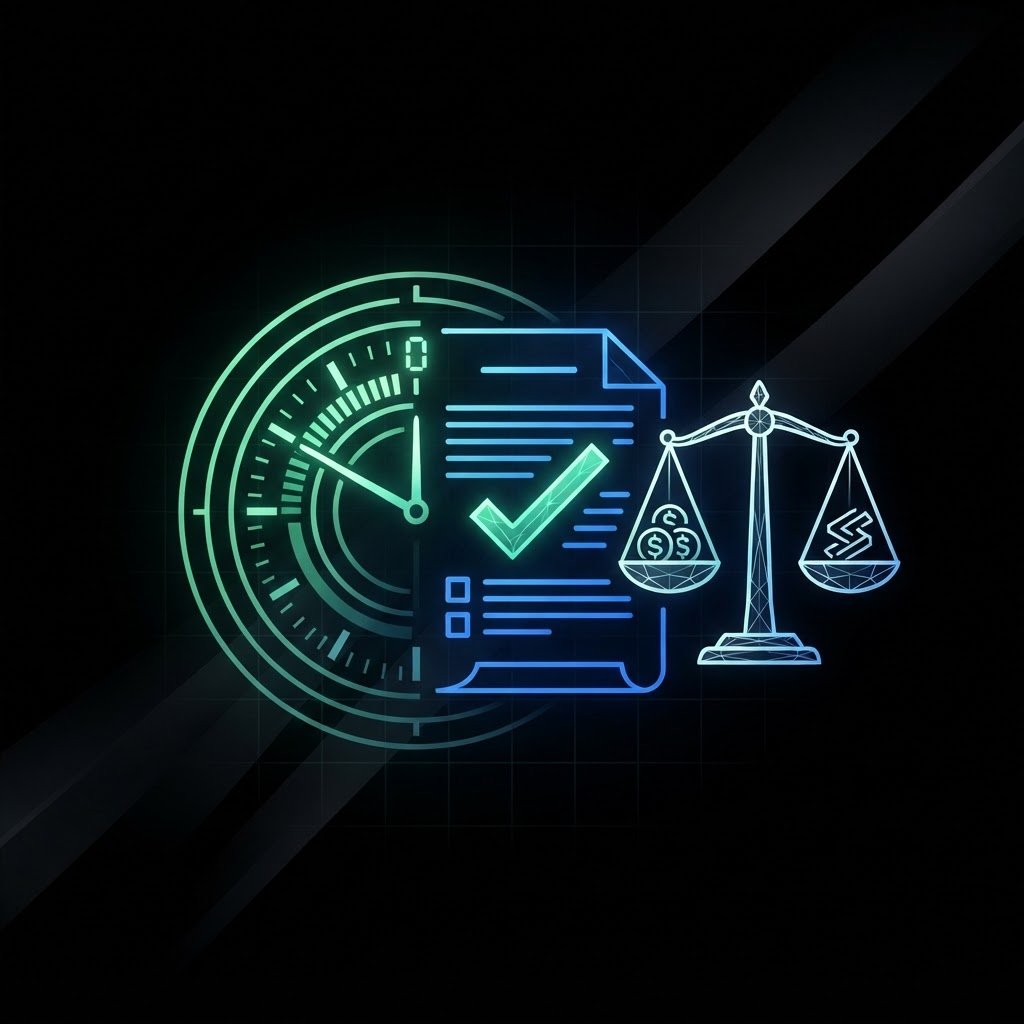
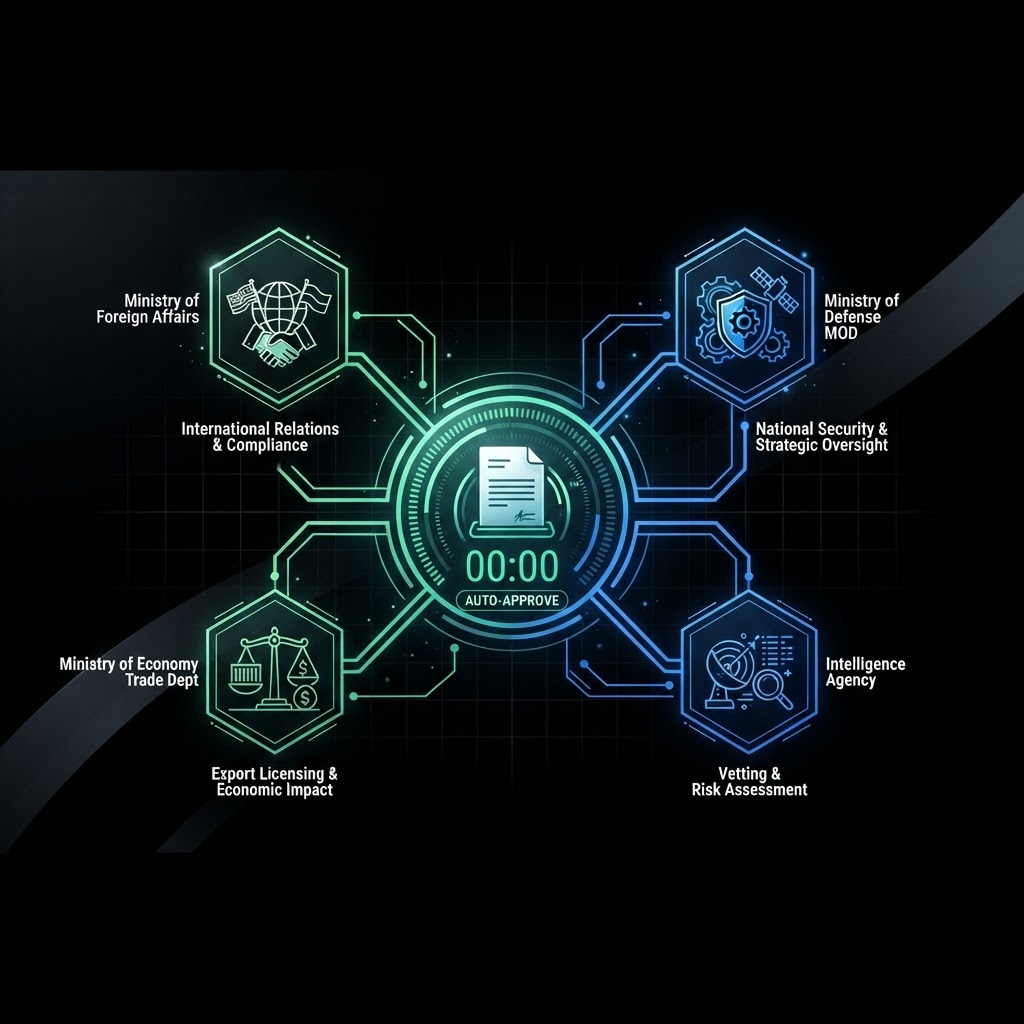
As of September 2026, the 'silent consent' mechanism under Cabinet of Ministers Resolution No. 875 mandates a 30-day cap on export permit processing. If the SBU, Foreign Intelligence Service, or Ministry of Defence fail to respond within their respective 15-20 day windows, approval is granted automatically. Despite this, industry reports indicate that implementation remains challenging, with no permits issued under this specific mechanism in its first two months, prompting expected regulatory refinements.
With the adoption of Cabinet of Ministers Resolution No. 875, the Ukrainian defense-industrial complex has received a fundamentally new model of administrative interaction. A key innovation is the automation of processes, which minimizes the risks of bureaucratic stalling by capping the total wait time for authorization at 30 days. However, as of September 2026, the industry is still navigating the practical application of these rules, with manufacturers and legal experts calling for further adjustments to ensure the mechanism becomes fully operational.
The 'Silent Consent' Mechanism: Ending Indefinite Delays
Before July 2026, exporters frequently faced documentation stalls lasting months. Current regulations are strict: a 15-day deadline is set for the SBU and Foreign Intelligence Service, and 20 days for the Ministry of Defence for goods (10 days for technologies). If a conclusion is not issued, approval occurs automatically. This transition positions the state as a more efficient partner, though it places increased responsibility on the manufacturer for the accuracy of their evidentiary base and compliance with the 'Drone Deal' partner country list.
New Areas of Responsibility and Economic Conditions
Current Implementation Challenges
While the legal framework is in place, industry representatives have noted that the transition period has been complex. As of late August 2026, stakeholders reported that the mechanism is still being calibrated to balance state security needs with commercial viability. Consultations between the Ministry of Defence and industry associations are ongoing, with expectations that the government will introduce refinements to the procedure in September 2026 to address concerns regarding fee structures and the threshold for small-batch export trials.
The new regime marks a transition from a 'negotiation-based permit system' to a transparent compliance regime where delays in government responses benefit the business rather than hinder it.
Practical Conclusions for Manufacturers
A financial threshold has been introduced: for finished products, the export contract must be at least 15 million UAH. For components, there are no limitations on the contract value. It is vital to remember that intellectual property remains under state protection, and re-export is possible only with written consent from Ukraine. Documentation errors result in automatic rejection without the right to a 'second round' of approval within the same application.
The Global Miltech Legal team will help you adapt to these new regulations. Reach out for a free initial case assessment to ensure your export documentation meets the requirements of Resolution No. 875 and does not carry risks for future contracts.
Часті питання
What should I do if my product is on the Ministry of Defence stop-list?
Exporting items on the stop-list is prohibited during martial law. We recommend focusing on other products or submitting a formal request to review the criticality status of your product through the relevant Ministry of Defence departments.
Does 'silent consent' apply to all agreements without exception?
The principle applies to standard approval procedures. Complex cases that require review by the Interdepartmental Commission under the NSDC are subject to different timelines and processing rules.
What financial obligations arise during export?
When exporting finished products, you must allocate 20% of the contract value to the state budget special fund; for components, this requirement is 30%.
Are there any exemptions for small-batch exports or testing?
Currently, the special mechanism under Resolution No. 875 applies to contracts worth at least 15 million UAH. Small batches for testing purposes may not qualify for this simplified procedure, and we advise consulting with legal counsel to determine the appropriate regulatory path for such transactions.
Related services
Sources
- Економічна правда
- НАКО (Незалежна антикорупційна комісія)
- Радіо Свобода
- Фінансові та IP-ризики експорту зброї за Постановою № 875: аналіз для виробників
Our experts

Pavlo Pavliv
CEO, Global Miltech Legal
Kyiv
Export process organisation · Contracts and international partnerships

Oleh Diakiv
Co-founder · CEO of PARABELLUM
Lviv
Contracts with foreign buyers · End-user certificates, JV, licensing

Mariia Overchenko
International Business Development
Krakow
International business development · Entry into new international markets · Building strategic partnerships · Communication with international partners
Planning to export defence products?
Global Miltech Legal handles the full cycle — from SECS registration to crossing the border. The initial case assessment is free.
Get a consultation